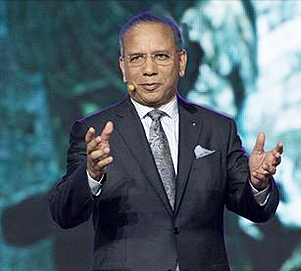
WHAT: A “World Polio Day” live-streaming event from the U.S. Centers for Disease Control and Prevention in Atlanta, featuring an address by CDC Director Tom Frieden, various celebrities and experts who will share progress on the road to polio eradication.
WHO: Rotarians, students and faculty of the University at Albany School of Public Health, and interested members of the public and the media are invited to attend.
WHEN: Monday October 24, 2016, from 5:30 to 7 p.m., with the live streaming beginning at 6 p.m.
WHERE: UAlbany School of Public Health (room 110A) on the SUNY Health Sciences Campus, 1 University Place, just off Columbia Turnpike in Rensselaer.
The recent discovery of several active polio cases in an area of Nigeria formerly held by rebels has sparked an immediate response from Rotary International and the Bill and Melinda Gates Foundation.
The partners in the global battle against the polio virus have raised $99 million to step up and widen immunization programs in the country. Prior to the breakout, the entire African continent was believed to be polio free. Polio is not curable. but it is preventable with an ongoing immunization program.
Clement Bisi-Adegoke, District 9125 Governor in Nigeria, disclosed the action while speaking with news media on Sunday. He said Rotary has provided $33 million, which the Gates Foundation matched 2-for-1.
Beyond the small region in Nigeria, endemic polio is believed to be evident only in Afghanistan and Pakistan, two countries where strict Islamist terrorists have regularly attached and killed immunization workers in an attempt to stop the medical outreach effort. Thirty years ago, before RI began its effort to eradicate the disease, hundreds of thousands of people were afflicted annually. That number has been reduced to several dozen.
Rotarians around the globe have been celebrating our 30-year-long fight to eradicate polio, and for several years it apparently had been restricted to just two countries whereas it once was common in all parts of the world.
Sadly, on Thursday the World Health Organization (WHO) and the Centers for Disease Control and Prevention (CDC) announced that two children have been diagnosed with polio paralysis in Nigeria. The irony is that the day of the announcement would have marked two years since the last reported case of polio on the African continent.
The development is a major setback to the international effort spearheaded by Rotary International (RI) that had sequestered polio into only Pakistan and Afghanistan. Even there, only 19 cases have been found this year, strong evidence that the immunization effort was nearing its goal of preventing all cases.
Polio, while incurable, is preventable with ongoing immunization programs. It is highly infectious and, if not prevented, causes paralysis, permanently twisted limbs, respiratory distress, and even death. In some cases polio survivors develop secondary health problems in their adult years that can be worse than the original onset.
People not familiar with the specifics of polio can find a quick but thorough explanation by clicking here to go to the SRC website page titled “What is polio?”
RI, WHO, and the CDC now are quickly preparing multiple emergency immunization efforts for millions of children in Borno state, Nigeria’s most northeastern province that shares land borders with the nations of Cameroon and Niger and a water border with Chad.
“This is a setback, definitely, these two cases that have been detected after two years of what we thought was a Nigeria free from polio,” Dr. Michel Zaffran, director of WHO’s polio eradication program, said in a briefing Friday morning. “This is a true disappointment.”
Zaffran told media there probably will have to be six separate rounds of vaccination covering northern Nigeria and its neighbors. The first, in Borno, should begin in a few days.
“This is a major response to what we consider a major threat to the polio eradication initiative,” he said.
According to the National Geographic news service, WHO said genetic analysis of the virus from the two children and their families, who live in different parts of Borno state, “reveals that it is most like a strain collected in Borno in 2011. That implies polio has never been eliminated from the region but instead was circulating silently, even though Nigeria had not detected any polio cases anywhere in the country since July 2014. The brutal math of polio epidemiology — experts consider that only one in every 200 cases is detected — makes it likely that polio could be present throughout the area.”
Borno is the home territory of Boko Haram, the fundamentalist terrorist militia that may be best known for kidnapping 276 schoolgirls from the town of Chibok. Boko Haram has conducted a sustained campaign of bombings and slaughters estimated to have killed 20,000 people in seven years, and has destabilized all of northeastern Nigeria.
Nigeria’s health minister, Isaac Adewole, said in a statement that the cases were found because government military action recently took back portions of Borno state from the militants, allowing “strengthened surveillance.”
Anyone who has wondered about joining in Rotary International’s global effort to eradicate polio beyond simply writing a check may be interested in the 11th annual West Africa Project Fair.
The hands-on polio immunization exercise will take place October 18-26 in Port Harcourt, Nigeria. Although the African continent is polio free, thanks mainly to RI work, ongoing immunization is necessary to prevent the return of the disease.
“It is hot; it is dusty; it makes you uncomfortable; it is exquisite.”
The per-person price of $1,629 includes double occupancy hotel accommodations, transfers, most meals, polio immunization exercise, community service field work, fellowship events, and sightseeing. An explanatory brochure and registration information are available by clicking here.
As the event organizers explain it, “The experiences you have stay with you forever. You get up early in the morning, travel with local Rotarians to a village, health clinic or impoverished neighborhood, and for the next few hours, you change. Small children come up to you to say thank you. Mothers and fathers smile at you knowing that you are giving their child a chance for a better life. You meet with the leaders in the village to learn of their needs and their hopes. It is hot; it is dusty; it makes you uncomfortable; it is exquisite.”
The West Africa Project Fair is endorsed by Rotary’s Reach in Africa Committee (ROTA), which works to generate greater connectivity between the African and North American Rotarians.
Our fellow Rotarians in the Niskayuna club have issued an invitation to join them at their “All American Party to End Polio.”
The event will begin at 4 p.m. next Saturday, August 20, at Beukendaal Fire Department, 501 Sacandaga Road, Glenville. The concert will feature the Jon Stickley Trio, a bluegrass/jazz group from Asheville, NC, currently on a Northeast tour. Rotary fellowship will begin at 4 p.m. with dinner and the concert will follow, to end about 8 p.m..
The price to attend is just $20 per person ($35 per couple) and includes the concert plus hot dogs, burgers, salad, soft drinks and water. You can purchase tickets online on the district website. If you are unable to attend, you can make a donation on the website to Rotary’s polio eradication efforts. All profits will go to that campaign.
Many food items are being donated by local merchants, which will help us toward our goal of raising $1,000, which will then receive a 2-for-1 match from the Bill and Melinda Gates Foundation — a total of $3,000, enough to pay for immunizations for about 5,000 children.
• John F. Germ of Chattanooga, TN, took office as president of Rotary International on July 1. In this, his first message, he sets the tone for his term in office.
Today, we look ahead toward a Rotary year that may one day be known as the greatest in our history: the year that sees the world’s last case of polio.
Wild poliovirus caused only 74 cases of polio in 2015, all of them in Afghanistan and Pakistan. As we continue to work tirelessly toward our goal of eradication, we also must look beyond it, preparing to leverage our success into even greater successes to come.
It is tremendously important to Rotary’s future that our role in the eradication of polio be recognized. The more we are known for what we’ve achieved, the more we’ll be able to attract the partners, the funding, and, most important, the members to achieve even more. We’re working hard at RI headquarters [in Evanston, IL] to be sure that Rotary gets that recognition.
Every day that you serve in Rotary, you have the opportunity to change lives. Everything you do matters.
But, it can’t all happen there. We need you to get the word out through your clubs and in your communities about what Rotary is and what we do. We need to be sure that our clubs are ready for the moment when polio finally is eradicated, so that when people who want to do good see that Rotary is a place where they can change the world, every Rotary club is ready to give them that opportunity.
We know that if we want to see [the motto] “Rotary Serving Humanity” even better in the years ahead, we’ll need more willing hands, more caring hearts, and more bright minds to move our work forward. We’ll need clubs that are flexible, so Rotary service will be attractive to younger members, recent retirees, and working people. We’ll need to seek out new partnerships, opening ourselves more to collaborative relationships with other organizations.
Looking ahead, we also see a clear need to prioritize continuity in our leadership. We in Rotary all are playing on the same team, working toward the same goals. If we want to reach those goals together, we all have to move in the same direction, together.
Every day that you serve in Rotary, you have the opportunity to change lives. Everything you do matters; every good work makes the world better for us all. In this new Rotary year, we all have a new chance to change the world for the better, through “Rotary Serving Humanity.”
Sometimes it takes different methods of communication to get a story told around the world. Here is an offbeat method we think may interest you. And, as always, feel free to share it with others.
Do you know how much it costs to provide oral polio vaccine for one child?
The answer is a mere 60 cents. That’s a small price to pay for a life free from a contagious disease that once spread paralysis, limb deformities, respiratory obstructions, and death in every country on Earth.
That is why Rotary International has been so relentless in its fundraising and vaccine distribution to combat a disease that cannot be cured but can be prevented. We’ve got it down to just two countries where polio is endemic — Pakistan and Afghanistan. But, because polio is so easily spread, a rigorous and ongoing program of vaccinations is a must.
The 3rd annual “World Polio Day” this year is scheduled for October 24. For every dollar donated by a Rotarian, the Bill & Melinda Gates Foundation will triple it. You can find details on what you can do to help by clicking here.
For those among us fortunate enough to grow up in a world without polio and raise their children without the fear of it, the question “What IS polio?” is understandable. We have an answer for that on a separate page elsewhere on this website. Just click here.
Rotary International President K.R. Ravindran closed the recent RI convention in Seoul, South Korea, with this poignant story about his mother’s fight to survive polio — at the age of 30.
When Ravindran was 11 years old in his native Sri Lanka, his mother awoke one day feeling weak and short of breath. Sitting down to rest, she found herself unable to move. The polio virus had quickly invaded her nervous system, resulting in paralysis.
She was placed in an iron lung at the hospital to enable her to breathe, and was told that her chances of walking, or even surviving without a ventilator, were slim. But most Sri Lankan hospitals were not equipped with ventilators in 1963.
Ravindran’s grandfather, a Rotary member, hosted a club committee meeting in his living room the evening after his daughter was rushed to the hospital. Rather than simply offer
“There are people on this planet whose lives are better now because you traversed this earth. And, it doesn’t matter if they know that or not. It doesn’t matter if they even know your name or not. What really matters is that your work touched lives; that it left people healthier, happier, better than they were before.”
— K.R. Ravindran’s closing remarks as RI president
consolation, his fellow members went to work, using their business acumen and professional connections to find a ventilator.
One of the members was a bank manager who called a government minister to facilitate a quick international transfer of funds. Another member, a manager at SwissAir, arranged to have a ventilator flown in. The next day, it arrived at the hospital.
“There was so much red tape at the time in Sri Lanka, but somehow, those Rotarians made it all fall away,” Ravindran told the audience.
Ravindran’s mother spent a year and a half in a hospital bed, but her condition gradually improved. She eventually left the hospital walking — with a walker, but upright, on her own two feet.
“Fifty-three years ago, my mother’s life was perhaps one of the very first to be saved from polio by Rotarians,” Ravindran said. “We have saved millions of lives since then. Tonight, I stand before you Read More »
 The recent discovery of several active polio cases in an area of Nigeria formerly held by rebels has sparked an immediate response from Rotary International and the Bill and Melinda Gates Foundation.
 Anyone who has wondered about joining in Rotary International’s global effort to eradicate polio beyond simply writing a check may be interested in the 11th annual West Africa Project Fair.
 Our fellow Rotarians in the Niskayuna club have issued an invitation to join them at their “All American Party to End Polio.”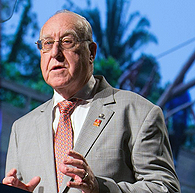

 Southern Rensselaer County Rotary Club