
Third Thursday Breakfast Meeting
Greenbush Area YMCA
1 Community Way
East Greenbush, NY
Members Attending (15): Shannon Romanowski, Ron Annis, Pat Bailey, Melissa Bill, Terry Brewer, Peter Brown, Debbie Brown, Murray Forth, Marko Koshykar, Andy Leyhane, Jim Leyhane, Becky Raymond, Debbie Rodriguez, John Sawchuk, Matt Smith.
Guests (2): Maureen McGuiness, Matt Wiseman.
PROGRAM: Rensselaer County Chamber of Commerce
 Rensselaer County Chamber of Commerce executive Maureen McGuiness was our guest speaker. She shared information on Chamber activities with not-for profit organizations and community organizations.
She also discussed the not-for-profit showcase held annually, the Chamber’s Award Leadership Program, building connections and networking with more than 900 businesses and 40 professional development programs.
Maureen said a club such as Rotary can join the Chamber for approximately
$500 per year.
Announcements/Business
OPENING: The meeting began with the Pledge of Allegiance and the invocation by Jim Leyhane.
BOWLING FOR VETS: Treasurer Murray Forth reported that the second annual event raised more than $3,600, of which $3,000 will be donated to the Blue Star Mothers and other veteran groups, with the remainder going to the club treasury.
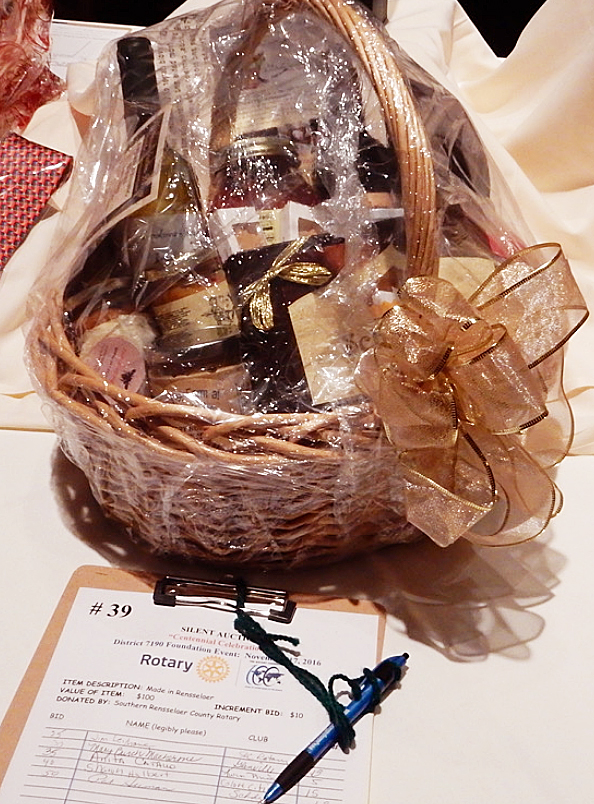
HOLIDAY PARTY: The annual Holiday Party and Theme Basket Silent Auction will be held at the Forth residence on Thursday, December 22. More information will be provided at a later date.
BASKET BONANZA: Terry Brewer reported that 10 Thanksgiving baskets were provided to the Community Cares group for distribution, with Shannon Romanowski coordinating the activity. The value of the baskets was $500.
ADOPT A FAMILY — April Dowd is coordinating with the Circles of Mercy organization our annual holiday effort. She has sent information via email to all members. … Terry is coordinating for a family with Doors of Hope in Averill Park. He will share information at the December 1 dinner meeting.
 RECYCLING DAY — A Recycling Day fundraiser will be held on Saturday, January 14, from 9 a.m. to 2 p.m. for paper and small electronic items. The location is Wainman Construction on Third Ave. Ext., Rensselaer. Details will be shared at the December 1 dinner meeting.
NEXT 3RD THURSDAY MEETING: 7 a.m. Thursday, December 15, at the Greenbush Area YMCA. Club member Andy Leyhane will provide the program.


 UPDATE (11/18/16): From April Dowd: I have just learned that the family we will be helping through Circles of Mercy this holiday season has received some devastating news. Darlene, the 70-year-old household head who is caring for her three great-grandchildren, has been diagnosed with cancer. Given that she will be faced with unexpected medical-related bills, we are expanding the needs/wish list for the family.
 The Southern Rensselaer County Rotary Club has had an ongoing partnership for a number of years with

 on Saturday ran into news main events at both ends of the trip.
 Southern Rensselaer County Rotary Club