News of this New York State club that practices "Service Above Self"
Author: SRCrotary
A volunteer service club located in Rensselaer County, NY, that is part of Rotary International, the 1.23 million-member international organization of men and women serving their community and their world.
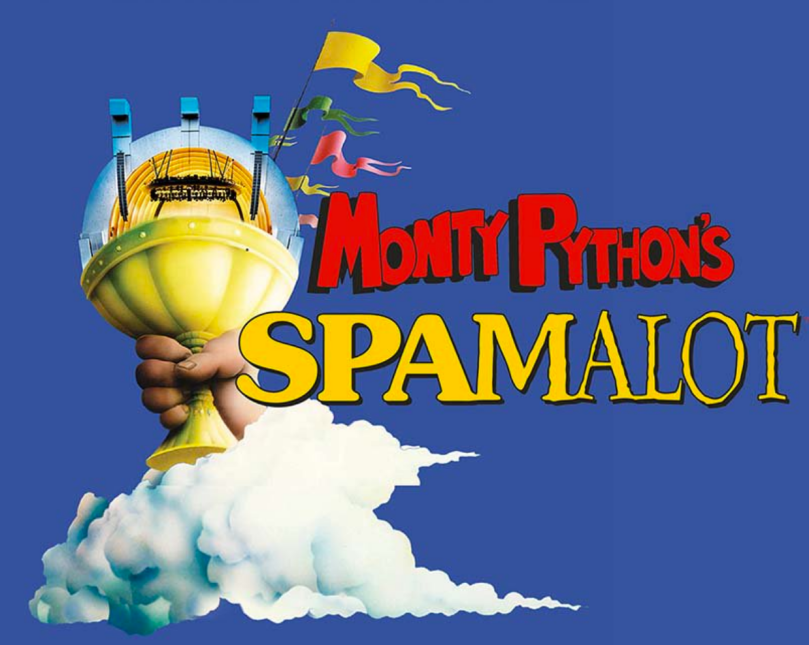
Event coordinator Debbie Brown today issued a last call for reservations for SRC’s excursion to the Mac Haydn Theatre in Chatham to see “Monty Python’s Spamalot” on Thursday, August 17.
If you would like to join us for this date on our “Summer Casual” schedule, Debbie needs to know by this Friday so she can arrange the tickets. Senior tickets are priced at $33, and general admission at $36.
Here are the people whose reservations have been received so far:
Pat Bailey
Debbie Brown
Peter Brown
April Dowd
Bill Dowd
Jeremy Forth
Maggie Forth
Murray Forth
Jim Leyhane
Roberto Martinez
Bonnie Nasca
Phil Nasca
Chuck Rodriguez
Debbie Rodriguez
Carole Spencer
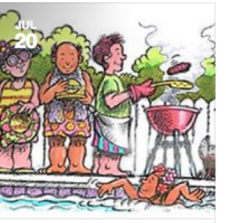
1. Are you planning to attend this Thursday’s “Summer Casual” 6 p.m. pool party and cookout at Murray and Maggie Forth’s residence in East Greenbush?
2. Are you planning to bring guests to this family-friendly event?
3. Have you let the Forths know you’re coming and how many will be in your party?
If you answered “yes” to the first two questions, but “no” to the third, tonight is the reservation deadline, so please call the Forths ASAP so they can get a proper headcount. And, please plan to contribute a small appetizer or dessert to the festivities.
FOOTNOTE– As everyone has been notified several times, our annual school supplies drive for needy kids is under way. Please check the shopping list posted on the club website and bring your tax-deductible donations to one of our summer get-togethers. Thank you.
Rotary International President-elect Sam Owori has died in the United States due to complications after a leg operation.
RI President Ian H.S. Riseley, who took office on July 1, confirmed the news, saying Owori died Thursday night. “Sam had undergone some surgery in Texas that he had been planning for some time, and there were post-operative complications from which he couldn’t recover. I will provide appropriate details when they are known. In this time of great loss, I ask you to keep Norah, the Owori family and Sam’s millions of friends around the world in your thoughts,” Riseley in a statement.
“Sam was a special person in so many ways, and is a huge loss. From the perspective of Rotary administration, we in Evanston are looking at what needs to be done as a result of Sam’s passing,” Riseley added.
Owori was nominated last August to head Rotary International as president for 2018-2019. He was a professional banker in his native Uganda, only the second African to be nominated to Rotary International, the body responsible for the administration, policy formulation and financial control of Rotary clubs worldwide.
After his election, Owori said he saw in Rotary “an incredible passion to make a difference.” As president, he planned to “harness that enthusiasm and pride so that every project becomes the engine of peace and prosperity.”
Owori was chief executive officer of the Institute of Corporate Governance of Uganda.
Before that, he was executive director of the African Development Bank, managing director of Uganda Commercial Bank Ltd., and director of Uganda Development Bank.
He studied law, employment relations, business management, corporate resources management, microfinance, and marketing at institutions in England, Japan, Switzerland, Tanzania, and the United States, including Harvard Business School.
Since becoming a Rotarian in 1978, Owori had served Rotary as regional Rotary Foundation coordinator, regional RI membership coordinator, RI Representative to the United Nations Environment Program and UN-Habitat, and RI director.
He was also a member or chair of several committees, including the International PolioPlus Committee, the Drug Abuse Prevention Task Force, and the Audit Committee.
Most recently, Owori served as trustee of The Rotary Foundation, chair of The Rotary Foundation’s Finance Committee, and a member of the Investment Committee, according to the Rotary website.
“Project Legos,” meant to refresh the spirit of Xavier Schmitt, Debbie and Chuck Rodriguez’s grandson, as he goes through a three-year-long, arduous treatment for leukemia, continues to do its work.
In this latest photo, Xavier, now home after another lengthy hospital stay, clearly is enjoying the most recent addition to his Legos collection.
“Project Legos” was conceived and originally funded by Jim Leyhane, who continues to handle the research and purchasing of various Legos kits. Anyone who wishes to help defray the costs of this ongoing effort can contact Jim directly.
And, of course, it can only help to send out good thoughts and prayers to Xavier and his family.
Our annual “School Suplies Drive” for pre-school and high school students in the Rensselaer City School District is under way.
Andy Leyhane has taken over coordinating duties this year from Bill Dowd, and is working with the sponsoring Circles of Mercy organization to collect as many items on the checklist below as possible. (Contributions are tax deductible.)
“I’ll be present to collect donations at our ‘Summer Casual’ events or will arrange to have a helper collect in my absence,” Andy says. “If you can’t make any of the events but still want to donate, not a problem. Just reach out to me and we can coordinate a pickup that is convenient for you.”
As always, the club encourages members and friends to involve their kids, grandkids, etc., in this drive as part of a “kids helping kids” effort. Anyone who would like to involve their business, non-Rotary organization, neighborhood, etc., in this drive is welcome to collect donations and get them to Andy. Please remember when purchasing items that our focus is on high school and pre-school students.
Circles is requesting the following types of school supplies:
• pencils (regular lead #2 and color)
• pencil sharpener
• pencil erasers
• pens (black or blue)
• markers (dry erase and color)
• pocket folders (assorted colors)
• 3-ring binders (in 2” and 3” sizes)
• looseleaf paper (college ruled)
• graph paper
• spiral subject notebooks (1, 3 and 5 subject, college ruled)
• subject dividers
• plastic zipper pencil cases / boxes
• 3×5” index cards
• yellow highlighters
• rulers (standard measurement with metric)
• Kleenex tissues
• hand sanitizer (small bottles)
• Post-It notes
• backpacks (no rollers/wheels)
• looseleaf reinforcement stickers
• combination locks (for gym lockers)
• flash drives
• ear buds (for computer use)
• scientific calculators
FLASHBACK!
This is how the District 7190 newsletter, The Toolbox, covered our effort last year.
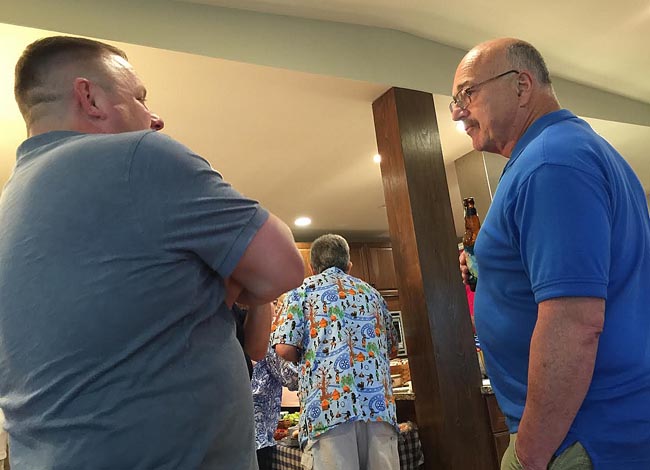
Although persistent rainstorms drove us indoors for the evening, Dick and Mary Drumm hosted a sumptuous picnic-style pulled pork dinner on Thursday, the first official event of our 2017-18 Rotary Year. Additional appetizers and desserts from the guests made for a very wide variety of treats.
Next Thursday’s “Summer Casual” event will be a pool party and cookout at the Forth residence in East Greenbush. Please RSVP to mmforth51@gmail.com no later than Tuesday and, if you plan to attend, please bring a small appetizer or dessert. Kids welcome!
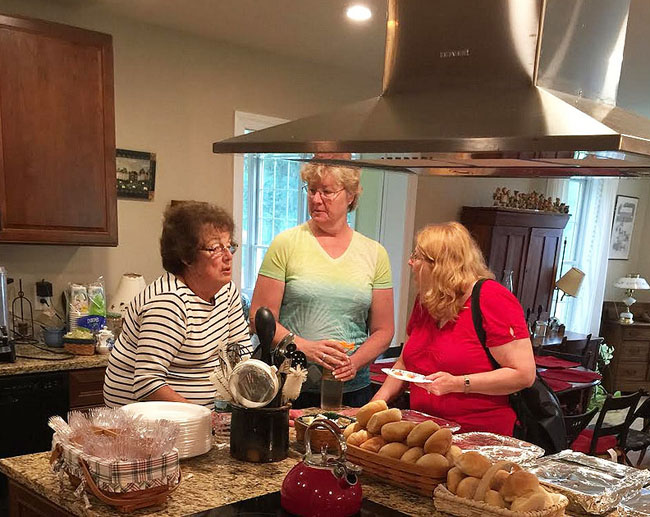
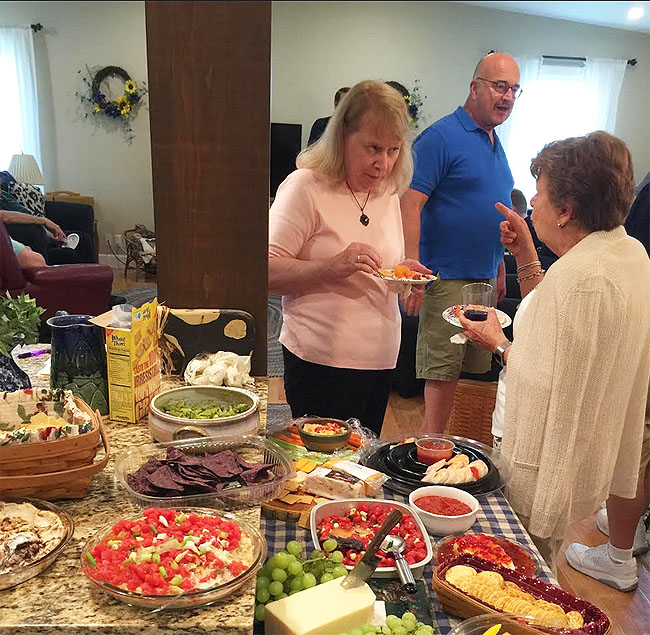
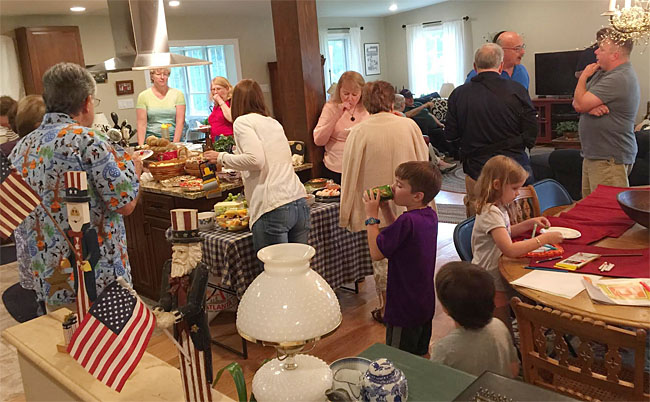
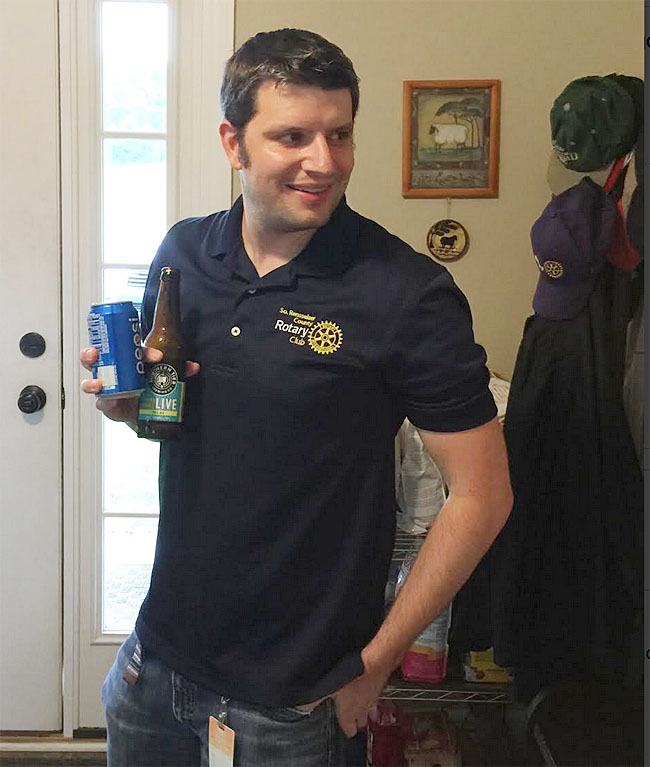
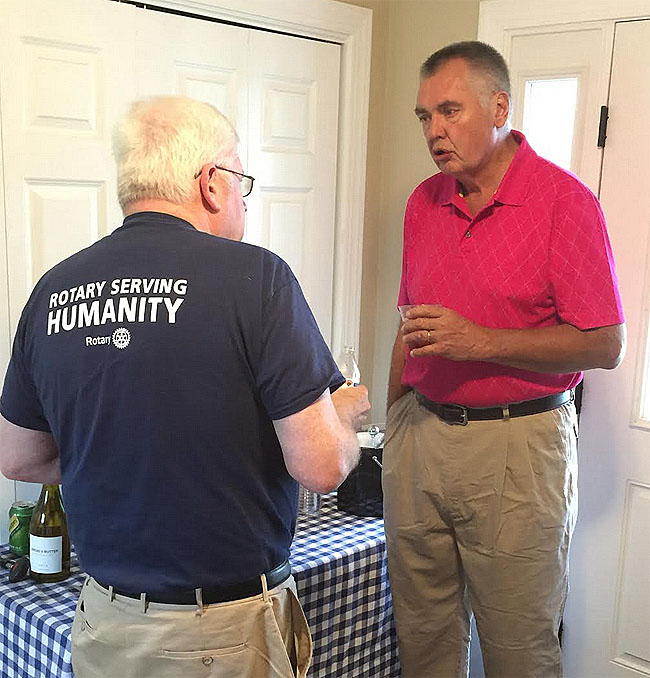
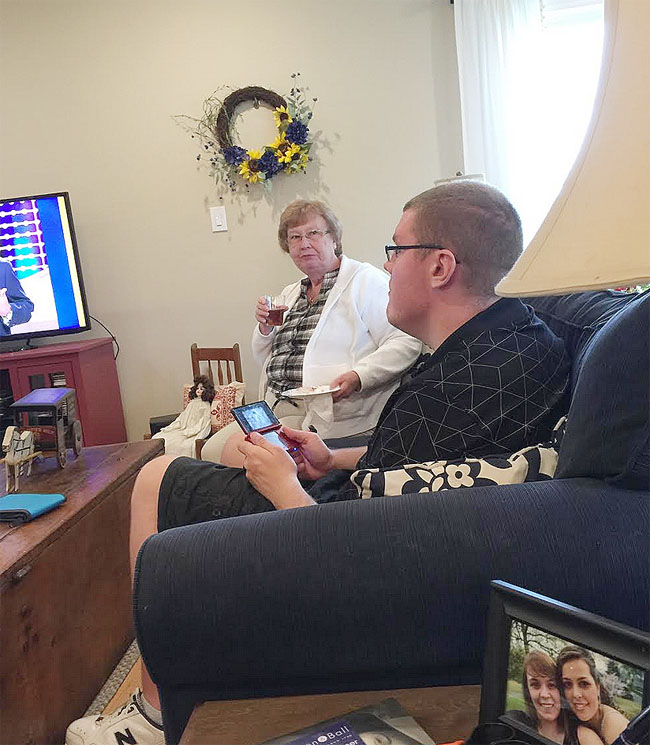
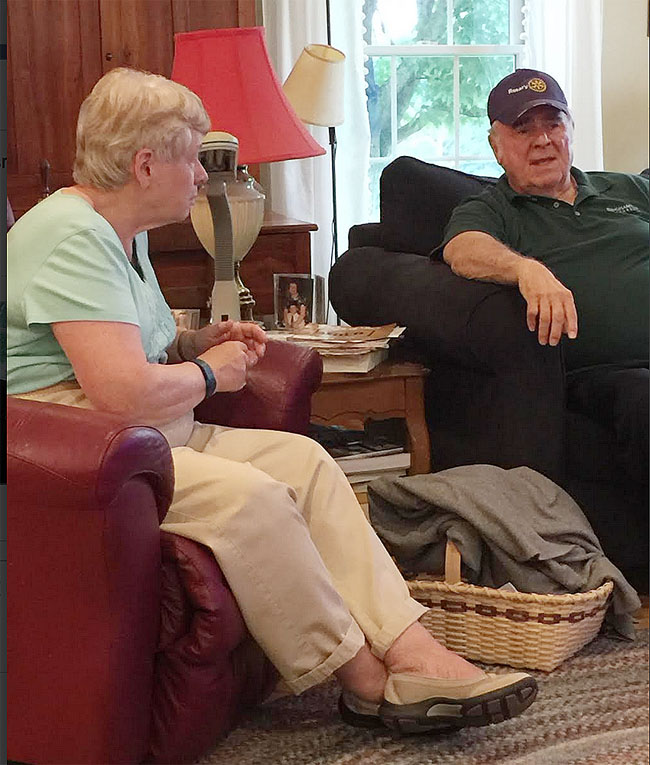
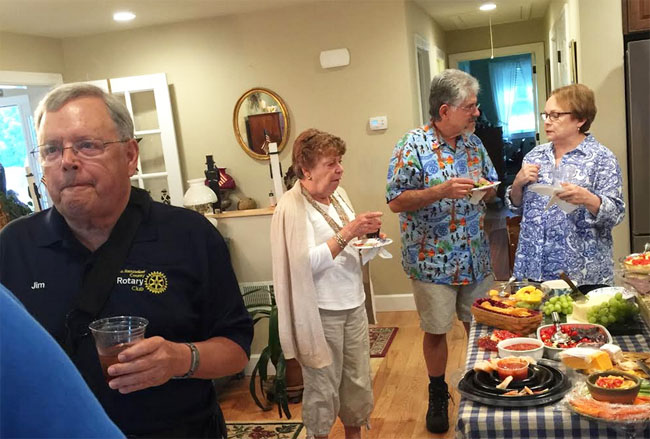
Here are a few scenes from this week’s event (which also served as a Gift of Life fundraiser):
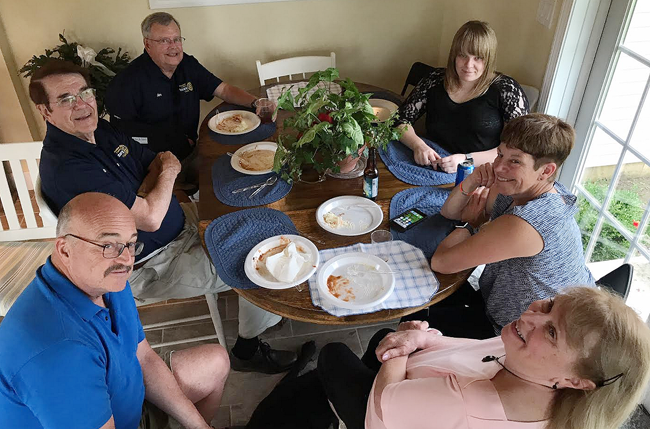
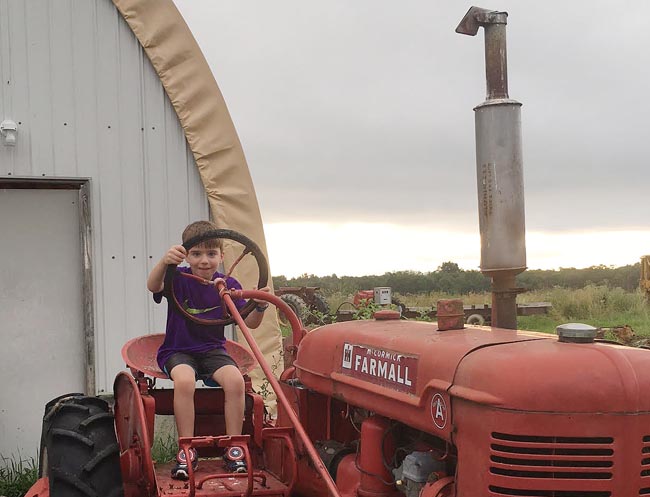
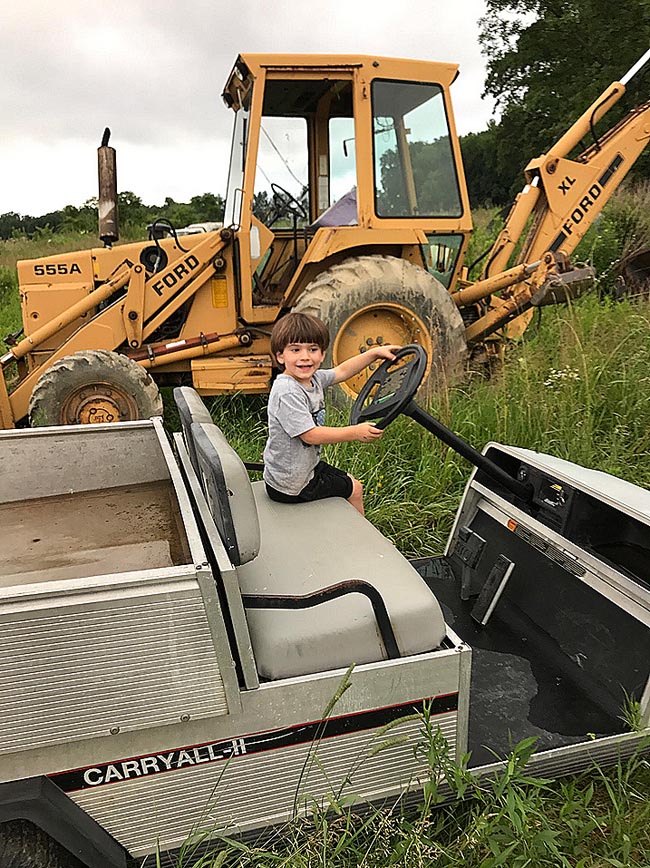
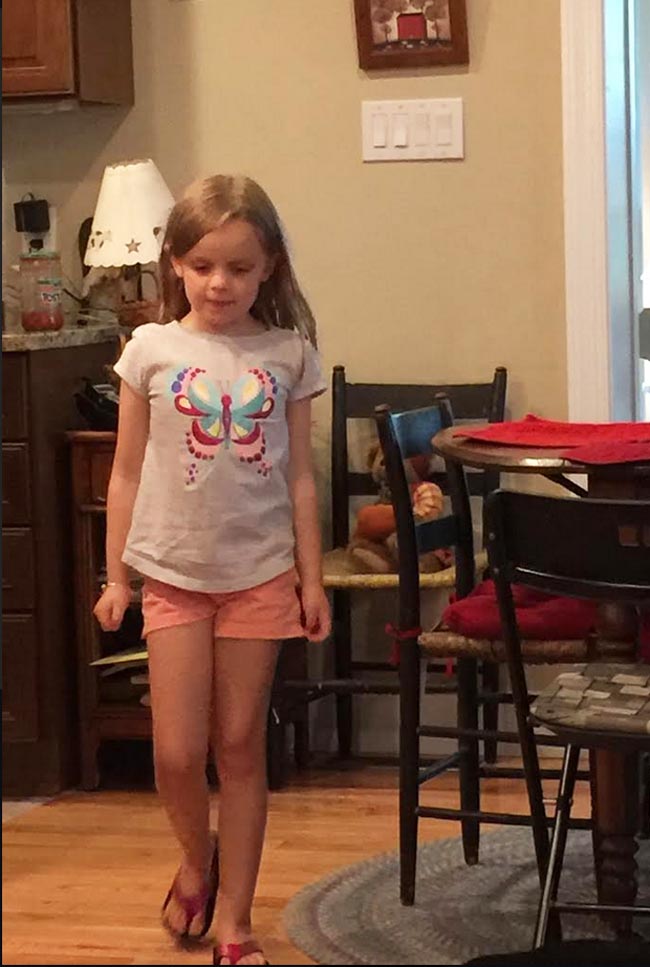
The lack of an indoor American flag didn’t prevent new club president Roberto Martinez from improvising for the Pledge of Allegiance to open our event.Bill Dowd, on the mend and back among us, and his ever-vigilant keeper April.OK, who gets first crack at the desserts?A serious chat over some frivolous food.A little something for everyone.Andy Leyhane displays his one-handed dexterity.Why is everyone so serious? It’s a party!Staking out the cushy seats.And, staking out other cozy chairs.Nothing like a good nosh to fuel conversation.Family & Friends.A couple of budding farm hands: Alistair Leyhane and …… Ashton Leyhane take make-believe turns at the wheel.I’ll do without the wheels, thank you.Is the “Monochrome Crew” discussing Roberto’s shirt?
The illustration above shows what our our “Summer Casual” schedule looks like for July and August. If you plan to participate in any of the family-oriented events, please be sure to let the event organizers know of your plans ASAP so appropriate accommodations can be made for food, beverages, and/or tickets.
This coming Thursday, for example, Dick and Mary Drumm are hosting a summer country picnic at their Valatie residence. Everyone has been sent directions and contact information, so if you have not yet let Mary know you’ll be attending — and how many people will be in your group — don’t forget to do so no later than this Tuesday evening. And, please bring a small appetizer or dessert item to share.
As far as other cookouts and/or pool parties, Murray and Maggie Forth will be hosting at their residence on July 20, Roberto Martinez will be hosting at his residence on August 3, Jim and Andy Leyhane will be hosting at Jim’s abode on August 10, and Ray Hannan will be hosting at Eastwyck Village on August 24.
As to field trips, Debbie Brown is asking people to make reservations through her for the August 17 performance of “Monty Python’s Spamalot” at the Mac Haydn Theatre in Chatham. And, Terry Brewer is handling tickets for the July 27 ValleyCats baseball game and pavilion picnic at Bruno Stadium (it’s “Rotary Night” again this year for all 7190 clubs). No unreserved tickets will be provided at the gate. See Terry ASAP if you have not yet reserved your tickets ($26 each).
We will have no club activity on August 31, but will resume our weekly dinner meetings at Quigley’s restaurant in East Greenbush on Thursday, September 7.
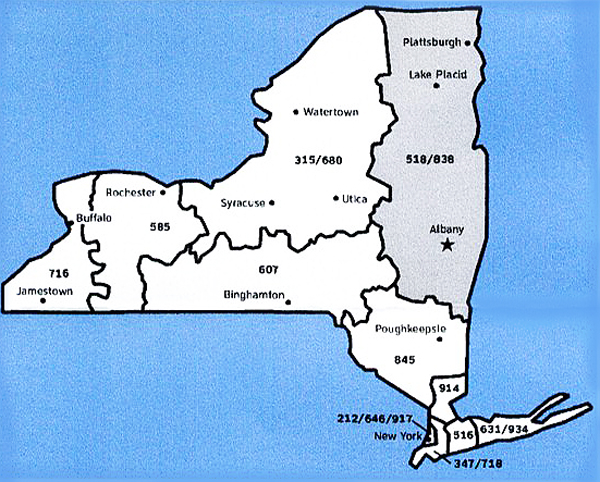
Effective Saturday, August 19, if you try calling a phone number in the 518 area code the way you always have, it won’t work.
That is the start date for full implementation of the new “Area Code Overlay” for the 518 area code. That means in addition to our current 518, the same geographic area will include a new code — 838. That is because they have virtually run out of new phone numbers for the 518 area.
You do not have to change your 518 area code. But, any new numbers issued on or after September 19 may be assigned an 838. However, to call anyone else with that code or with the new 838 code, you will have to use a 10-digit calling sequence just as you do now for long distance calls.
For example, if you normally call your cousin Mary locally at 555-5555 you will have to dial 518-555-5555. And, for local calls to people or businesses that have been assigned a new 838 code number, you also will have to dial a 10-digit code such as 838-555-5555.
If you want to get in the habit of the new requirement since it will become part of your way of life and there’s nothing you can do about it, you can begin practicing by using a 10-digit sequence right now. If you forget and just use the usual seven-digit local numbers your calls will be put through until August, but not after that.
This change may require a variety of changes for some people. For example, all numbers you have stored for automatic dialing on your cellphones or landlines, for answering machine messages, call forwarding, fax machines, speed dialers, internet dial-up numbers, safety alarm security systems and other such equipment will have to be reprogrammed with a 10-digit sequence. Likewise for any printed material — checks, office stationery, websites, Facebook pages, pet ID tags, etc. Whatever you do not change will not work after August 19.
Additional information is available online by clicking here.
NOTE: This change does not affect the 911 emergency number. It remains the same.
• This essay was written by a member of the Oregon City (OR) Rotary Club who has been an entrepreneur, motivational speaker, and human services activist for decades.
By Michael Brand
Michael Brand
Nothing more American than a service club. Rotary, Lions, Kiwanis, IOOF, Altrusa, Shriners … Frenchman Alexis de Tocqueville rode all over the United States in the 1830s and was struck by the influence of religious, fraternal and civic organizations, and secret societies, on American democracy and concluded that they made communities stronger, more interesting, and more engaged.
But, there are some reasons for concern. All of these service clubs, once the backbone of community life in America, have been in significant decline over the past two or three decades. It is not that our clubs have changed. America has changed. Thus, the imperative is for us to reinvent for a new America.
Declining Social Capital
In his 2000 book “Bowling Alone: The Collapse and Revival of American Community,” Robert Putnam documented that attending club meetings, such as those held by Rotary and Kiwanis groups, has declined by 58% in the period 1975-2000. This trend continued and even accelerated in the 21st Century. Putnam notes it’s part of an overall trend by Americans who also have 43% fewer family dinners; 35% fewer of us have friends who drop in to see us at our homes.
Pick an organization and the numbers are telling. In the past two decades Rotary down 20%, Jaycees down 64%, Masons down 76%. Recalling de Tocqueville’s observation
about the role our clubs play in a civil society, this decline represents a tangible loss to community. The question remains, “Where do we go from here?”
Since most service club leaders are in office for but one year, they shoot for short-term quick fixes such as a membership drive. However, for most of our service clubs the issue is not recruitment but retention. Rotary averages 44,000 new members per year and loses an average of 51,000. They cannot keep members. If businesses are not keeping customers, the leaders generally make it top priority to find out why and correct the reasons. If they fail, they most likely will not be leaders for very long. Common sense says the same principle should apply to service clubs as well.
Think Tribes, Not Community
The classic definition of community is associated with a physical place, hence many of our service clubs are branded with a “place” such as Jamestown Lions Club. But, emerging generations of Americans now define community by their affinities: the gay community or the tech community. Even college alumni groups now tout themselves like independent countries such as “Spartan Nation” at Michigan State University.
Seth Godin is an entrepreneur who ruminates on marketing in the digital age. Author of several best-selling books, Godin argues that digital life has ended traditional mass communication and replaced it with an ancient human social unit, The Tribe. These are groupings of people founded on shared ideas and values. As such, tribes give ordinary people the power to lead and make big change.
In the new world, what people desire most is an opportunity to connect with one another. People like bonding with other people. It’s human nature. If we create opportunities for people to connect, they’ll open up and feel more comfortable. As they do, they’ll invite us into their lives and will introduce us to their friends. Then their friends become our family, our tribe. One by one we rebuild our clubs.
The data is so overwhelmingly convincing. One-half of charitable giving in the United States is not driven by what people care about, it is driven by what their friends and family care about. Consider the charity walk or bike ride. Most of those involved have little driving passion for the issue at hand, but join up to walk as part of a team organized by a friend or family member. It’s their community. The service clubs which will thrive in this new era are the ones who build out their tribe.
Prioritize Time Over Treasure
The speed of American life has picked up. While we are not working that much more than previous generations, we are spending vastly more time in what might be called “structured leisure activities.” This is especially true for families with children. For them, time is more prized than talent or treasure. For two-parent families, both are often working and sharing household and child rearing duties.
So, what will attract them is not so much our mission, but how we can add to the quality of their lives. Their time is precious. So, how can we adapt in order to make ourselves more welcoming to this emerging America?
Build An An Informal Atmosphere
Is the format of our club outdated? Is the weekly lunch/dinner/breakfast a productive format? Are the rituals in our meeting making sense to younger Americans? Many try to sidestep or ignore these impediments rather than deal with them. That’s human nature because the most powerful force in the world is the status quo.
But, Americans now connect online so don’t need the time investment of a weekly meeting to network. Leaders must identify and remove obstacles. Is the structure of our club meetings an obstacle to involvement? One thing is abundantly clear: What emerging generations want in physical meetings is for the environment to be fundamentally social, fundamentally conversational and fundamentally less formal.
Enable Them To Bring The Whole Family
One of the encouraging trends in modern America is how men have taken a much more active role in child rearing. Some of this is driven by women’s increasing role in the workplace and some by men desiring to play a more intimate role in the development of their sons and daughters.
These two-parent, two-career families have higher than average incomes and should be a priority to our recruitment strategy. They earn more and are more active than other demographics. If we want to get them we have to offer a milieu that permits and engages their children as well, for they will not give up valuable family time for anyone. So, does our club offer a family friendly environment?
Will this attract the next generation?
TED talks have become the gold standard among young professionals because such sessions arouse followers’ thoughts and imaginations, as well as stimulating their ability to identify and solve problems creatively. People gravitate to places containing others who awaken their curiosity, challenge them to think and learn, and encourage openness to new, inspiring ideas and alternatives.
While we may not be able to book high-level speakers, we can look at altering meeting formats. How about facilitated discussions around a pressing societal issue? How about reflective exercises that engage members to think deeply about a topic?
These ingredients are essential to creating an environment in which people are willing to invest their time. Intellectual stimulation is defined as encouraging innovation and creativity, as well as critical thinking and problem solving. Intellectual stimulation involves arousing followers’ thoughts and imagination as well as stimulating their ability to identify and solve problems creatively
People love environs that awaken their curiosity, challenge them to think and learn, plus encourage openness to new, inspiring ideas and alternatives. These elements are essential to pulling in the emerging generations and thus ensure club success.
Let Them ReThink You
It’s not “Come do what we do,” it’s “What do you want to do?” Can our club be an incubator for young creatives to develop new and interesting ways to address our traditional issues?
One aspect of emerging generations is their desire to have an impact now. It means they will not wait five years to be elected chair of the fundraising committee before seeing their ideas in action. If it’s not happening today, they’ll walk away.
Victor Hwang, in his book “The Rainforest,” metaphorically notes that most of us were trained to manage farms. By this he means our approach to anything is that we know what we want to grow, know when to plant the seeds, plant in straight lines, kill anything that looks like a weed, know when to harvest, and can anticipate roughly our yield. The rainforest, by comparison, is a chaotic environment in which all sorts of genetic mutations are taking place and everything looks like a weed.
Hwang’s point is that we need more rainforests. But, that means relinquishing some measure of control. Not always easy when we have 60, 80, 100 years of tradition behind us. Yet, by allowing emerging leaders to reinvent our club we can navigate a path to securing our survival.
Inventing The American Future
Service clubs are an American innovation that have evolved into a worldwide institution. While vibrant across the globe, the loss of membership in the United States represents a loss of social capital and civic engagement.
Today, potential members are constrained by lack of time. In addition, they may not see much use in an organization whose prestige and vitality is in question. It is imperative we reinvent.
That may involve passing the torch and allowing an emerging generation of leaders to reinvent our clubs according to their needs. The alternative may be irrelevance and obscurity.
• This essay elicited some robust discussion on the author’s blog. Click here and scroll down past his post to read some of the wide-ranging experiences and comments from others.
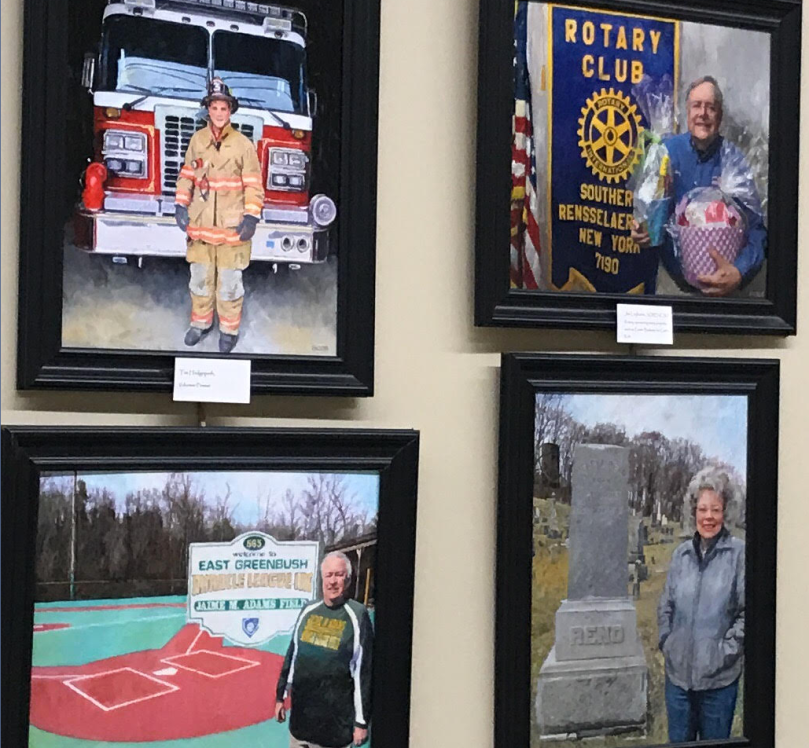
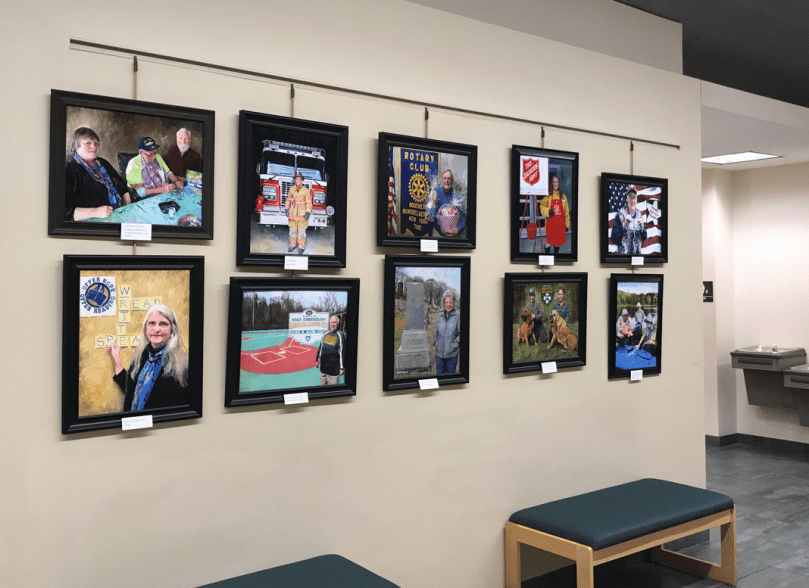
Jim Leyhane (top right) and Burke Adams (bottom left) are among local volunteers included in a series of paintings on display at the East Greenbush Public Library.
Two members of the Southern Rensselaer County Rotary Cub — Jim Leyhane and Burke Adams — are shown among an array of original paintings by local artist Robert Bode honoring local volunteers and now on display at the East Greenbush Public Library.
Says Bode, “This group of volunteers are some of the nicest people I’ve painted.”
 1. Are you planning to attend this Thursday’s “Summer Casual” 6 p.m. pool party and cookout at Murray and Maggie Forth’s residence in East Greenbush?
 “Project Legos,” meant to refresh the spirit of Xavier Schmitt, Debbie and Chuck Rodriguez’s grandson, as he goes through a three-year-long, arduous treatment for leukemia, continues to do its work.
 Our annual “School Suplies Drive” for pre-school and high school students in the Rensselaer City School District is under way.


 Effective Saturday, August 19, if you try calling a phone number in the 518 area code the way you always have, it won’t work.
 • This essay was written by a member of the Oregon City (OR) Rotary Club who has been an entrepreneur, motivational speaker, and human services activist for decades.
 Southern Rensselaer County Rotary Club